

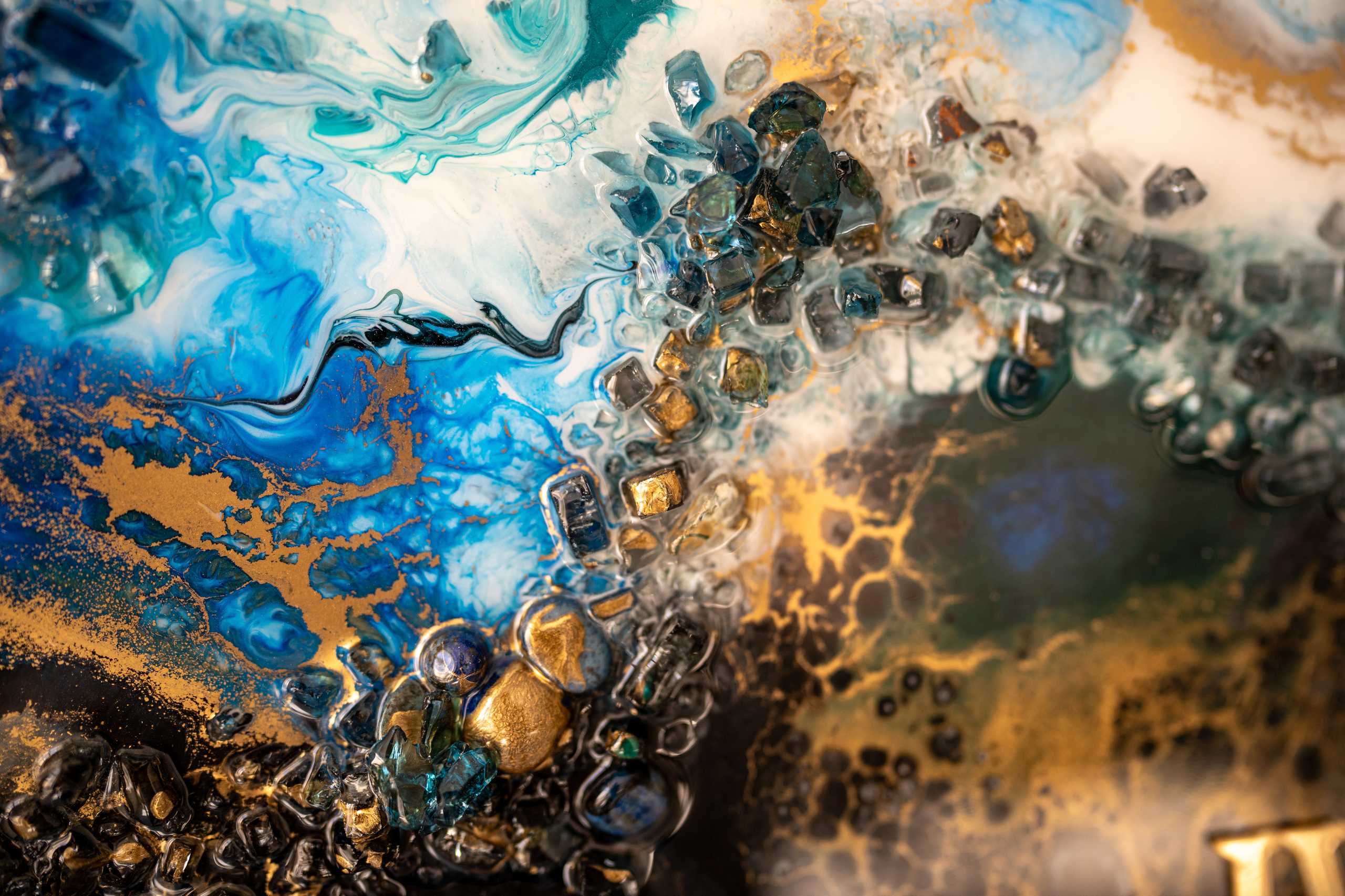
Once you’ve mastered the basics of resin ocean waves, it’s time to explore advanced techniques that add depth, texture, and professional polish to your creations. These methods help transform a simple wave into a mesmerizing, lifelike masterpiece.
Layering for Depth and Dimension
Creating realistic waves requires careful layering:
- Multiple Pour Layers: Start with a deep base color and gradually pour lighter shades to mimic sunlight hitting the water.
- Translucency Control: Adjust pigment opacity to allow underlying layers to peek through, giving a sense of depth.
- Foam Effects: Use white resin mixed with a small amount of silicone oil to create foamy wave tips that appear natural and dynamic.
Layering adds complexity and realism, making each wave appear alive.
Texture Techniques
Texture brings the ocean to life. Consider these methods:
- Heat Manipulation: Gently move the resin with a heat gun to form organic ripples and wave movements.
- Spatula and Palette Knife: Sculpt small peaks and troughs, emphasizing the natural flow of water.
- Additives: Incorporate sand, crushed shells, or mica powders to mimic natural coastal textures and reflective surfaces.
Experimenting with different textures encourages creativity while producing unique, tactile results.
Color Blending Tips
Color can make or break the realism of your ocean wave piece:
- Gradients: Transition from deep blues to turquoise and aqua to suggest varying water depths.
- Highlighting: White highlights on edges simulate sun reflections or breaking waves.
- Metallic Accents: Subtle hints of metallic pigments mimic light glinting on water surfaces.
Thoughtful color blending enhances the overall impact of your artwork and draws the viewer’s eye naturally.
Creative Inspirations
- Study Nature: Observe tide patterns, coastal formations, and the movement of waves.
- Photography Reference: Use images of oceans and beaches for guidance on color, foam patterns, and textures.
- Mixed Media: Combine resin with acrylic paints or pastels to achieve unique effects, depth, and contrast.
Let your inspiration guide your choices while maintaining technical precision.
Conclusion
Advanced resin techniques allow artists to elevate their work beyond simple wave representations. Layering, texture manipulation, and thoughtful color blending create art pieces that are immersive, dynamic, and visually striking. By combining skill, observation, and experimentation, your resin waves can capture the endless beauty and energy of the ocean.