

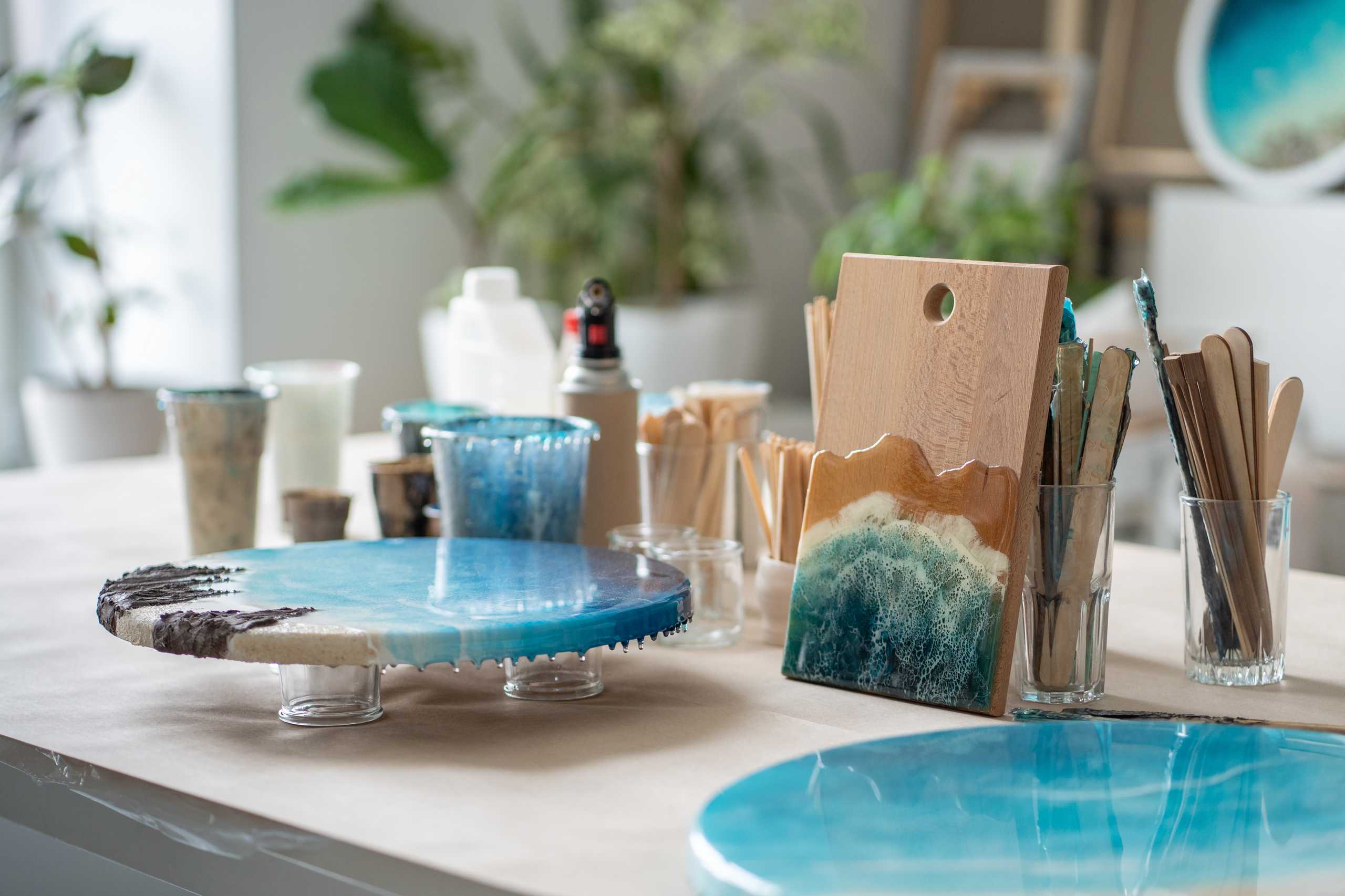
Even experienced artists encounter challenges when working with resin. Understanding common mistakes and learning how to prevent them is crucial for producing beautiful, professional-looking ocean wave art. This guide highlights pitfalls and practical solutions.
Mistake 1: Bubbles in Resin
Air bubbles are a frequent problem that can ruin the smooth surface of resin waves. Causes include:
- Mixing too quickly, introducing excess air
- Pouring resin in a humid or cold environment
- Not using a heat gun to remove trapped air
Solution: Mix resin slowly and deliberately, maintain optimal working temperature, and gently use a heat gun or torch to release air bubbles before curing.
Mistake 2: Uneven Layers and Colors
Beginners often pour thick layers or mix colors incorrectly, leading to muddy or uneven effects. This can reduce the realism of waves.
Solution:
- Use thin layers and allow each to partially cure before adding the next
- Pre-plan color gradients to maintain depth and vibrancy
- Test combinations on small samples to understand how pigments interact
Mistake 3: Overworking the Resin
Manipulating resin excessively can cause blending issues or disrupt the natural flow of waves. It may also trap bubbles or uneven textures.
Solution: Work patiently, move resin only when necessary, and focus on small sections at a time to maintain fluidity and realism.
Mistake 4: Ignoring Safety Measures
Resin contains chemicals that can irritate skin or lungs. Skipping safety precautions can lead to health risks.
Solution: Always wear gloves, masks, and protective clothing. Work in a well-ventilated area, and store materials safely. Following safety guidelines ensures a healthy creative environment.
Tips for Consistent Improvement
- Keep Notes: Document techniques, color combinations, and layer sequences for future reference.
- Practice Regularly: Consistency builds skill and confidence over time.
- Seek Feedback: Join resin art communities to learn from peers and refine your approach.
By learning from mistakes and applying these solutions, you can significantly improve your resin wave art. Every challenge becomes an opportunity to enhance your technique and produce stunning, ocean-inspired pieces.